
Biometric logins are becoming more common than ever — from unlocking your phone with a fingerprint to accessing apps with facial recognition.
But even as these tools grow in popularity, cybersecurity experts are divided. Are biometrics really safer than traditional passwords, or do they simply feel more secure?
In this guide, industry professionals explain why your emotional response to a security method can matter just as much as its technical design — and why multi-factor authentication (MFA) remains essential no matter which option you choose.
Regardless, Enable Multi Factor Authentication for Security
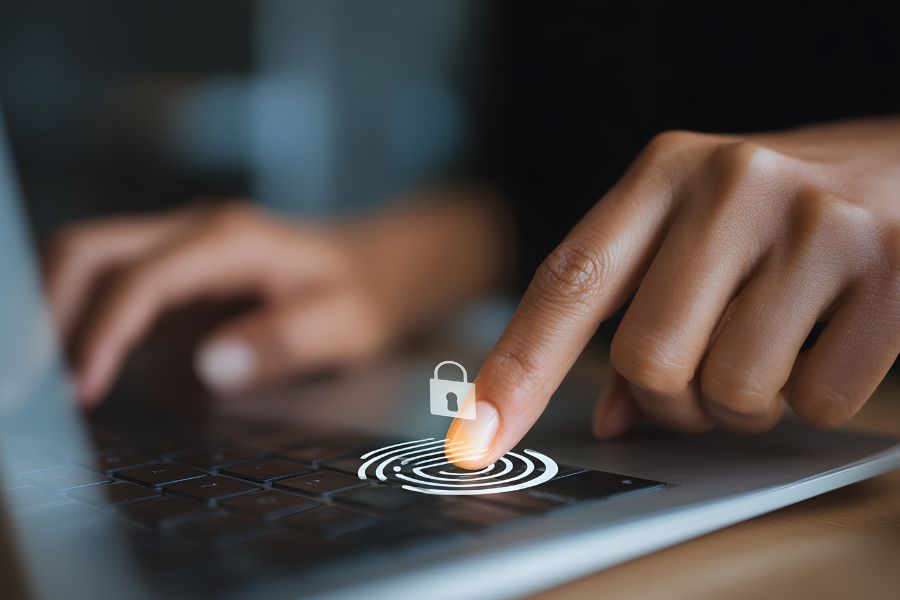
Biometric logins such as fingerprint, facial, or voice recognition offer strong convenience and identity assurance, but they should not be viewed as a complete replacement for passwords/secrets.
Biometrics excel at verifying who you are, while passwords or credentials verify what you know.
The most secure option is to always enable Multi-Factor Authentication, which can be used to authenticate to access sensitive systems/applications/products.
Karthikeyan Ramdass, Cybersecurity Lead Member of Technical Staff
Use Both Biometrics & Traditional Passwords
Biometric and traditional passwords each bring strengths — one provides convenience and identity confidence, while the other offers control and the ability to reset your credentials.
But the real key is combining them.
Enabling multi-factor authentication ensures that even if one layer fails, another stands between you and an attacker.
And understanding how people feel about security — not just how it technically works — helps organizations build systems users will actually trust and adopt.
Use biometrics for ease.
Use randomly generated passwords.
Use MFA to stay truly secure.
Leave a Reply